The Shifting Landscape of Voting Rights and African-American Voter Trends: An Analysis
The recent Supreme Court decision to narrow the Voting Rights Act has reignited discussions surrounding voter rights and representation in the United States. President Trump’s reaction was celebratory, indicating a perceived victory for the Republican Party. However, a deeper examination reveals implications that extend far beyond partisan triumphs.
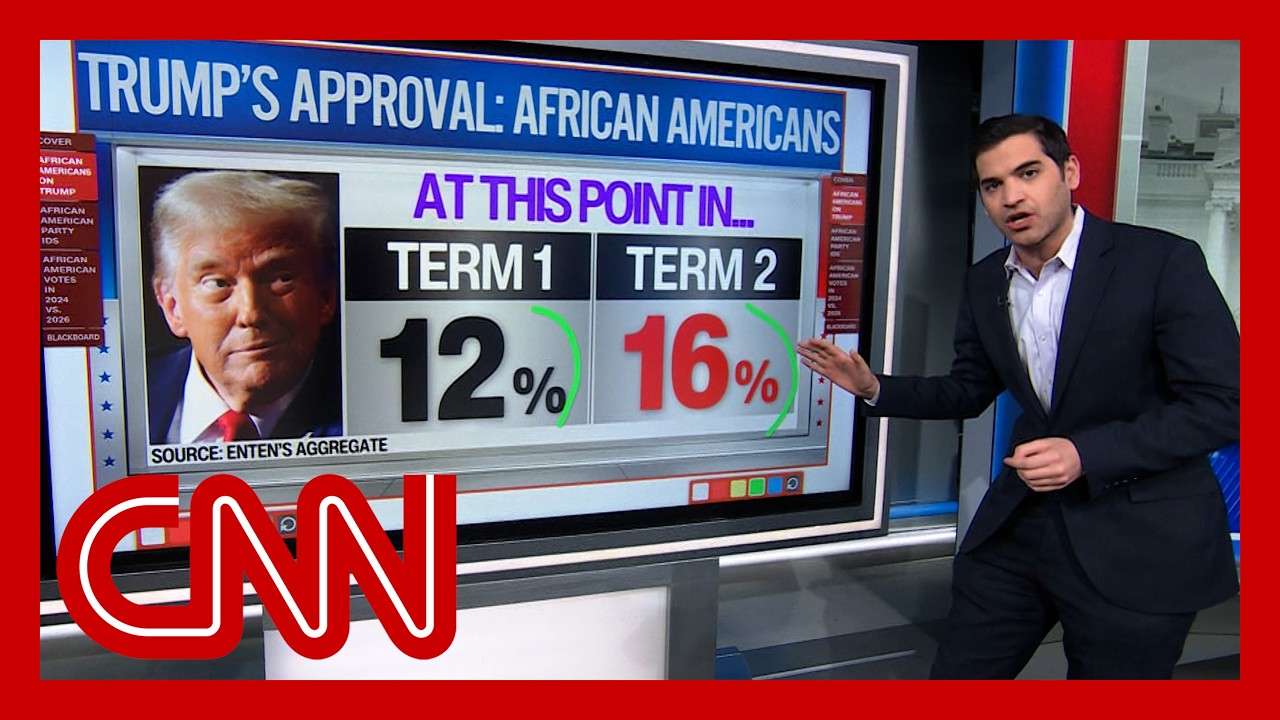
Harry Anton, CNN’s chief data analyst, illuminated a notable shift in the approval ratings of President Trump among African-American voters. In his first term, Trump’s approval rating rested at a meager 12%. Fast forward to today, and that figure has climbed to 16%. While this increase may appear marginal, it represents a significant breakthrough for Republicans, particularly in a political landscape long dominated by Democratic support from African-American communities.
What is particularly striking is the declining party identification margin for Democrats among African-Americans. During Trump’s initial term, Democrats held a staggering 63-point advantage in party identification. Current data suggests that this margin has waned, illustrating a double-digit shift toward Republican affiliation. Such trends could reshape the dynamics of upcoming elections, particularly in critical battleground states like Georgia, where shifts in voter sentiment may be pivotal.
Anton emphasizes that this is not merely a fleeting moment but part of a more extended trend whereby Trump’s Republican Party is gaining ground. The shrinking Democratic advantage could have substantive implications for congressional control in future elections. The Republican gains among African-American voters are unprecedented, marking a notable departure from historical patterns where Democrats held a stronger grip on this demographic.
The Supreme Court’s recent ruling also raises significant concerns regarding the integrity and accessibility of voting. The court’s decision to strike down Louisiana’s district map, citing illegal racial considerations, is a troubling development for advocates of fair representation. Historically, Section Two of the Civil Rights Act has provided a bulwark against racial gerrymandering, preserving the voting power of minority groups. However, the court’s latest verdict effectively undermines these protections, igniting fears of increased voter suppression.
The essence of voting rights lies not just in the act of casting a ballot but in ensuring that every individual’s voice is heard and represented. The ability to choose one’s candidate is fundamental to democracy. Unfortunately, gerrymandering can dilute this power, rendering some votes meaningless. The implications of the Supreme Court’s decision may extend well beyond Louisiana, emboldening Republican candidates in various southern states to push for district maps that favor their party.
As discussions surrounding the Voting Rights Act intensify, former Attorney General Eric Holder’s insights underscore the urgency of this issue. Holder, who was actively involved in defending the Voting Rights Act against various challenges, expressed profound concern over the rising barriers faced by minority voters. He argues that the protections established by the Voting Rights Act remain essential in the ongoing struggle for equitable representation, particularly given the persistent disparities that exist along racial lines.
The court’s majority opinion suggested that vast social changes have rendered sections of the Voting Rights Act obsolete. This perspective, however, risks underestimating the ongoing challenges faced by African-Americans and other marginalized communities in our electoral process. Economic inequality, disparities in education, and health outcomes illustrate that race remains a significant factor in American life, contradicting the assertion of a post-racial society.
As discussions surrounding the Supreme Court’s composition—particularly regarding potential expansion—continue, Holder raised a crucial point: those advocating for such changes are often accused of court packing, despite the reality that the court’s current makeup has benefited from partisan maneuvering. The need for a Supreme Court that reflects the diversity and complexity of American society has never been more pressing.
In summary, the intersection of voting rights and shifting demographics among African-American voters poses both challenges and opportunities. As the political landscape evolves, it is imperative for advocates of democracy to remain vigilant in protecting the rights of all citizens to ensure that every voice is not just counted but heard. The road ahead may be fraught with obstacles, but the commitment to equity and justice in voting rights remains essential for a truly democratic society.